
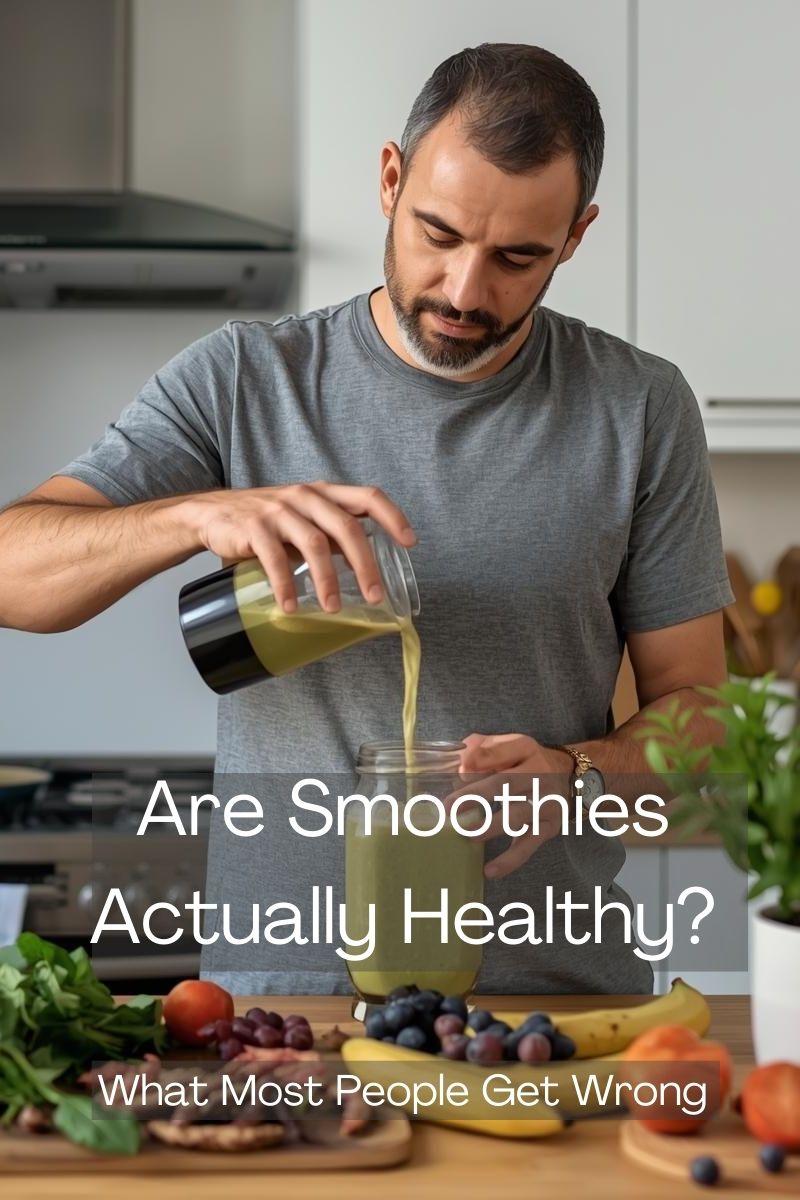
Smoothies are everywhere.
Some people swear by them. Others avoid them completely. And depending on who you ask, smoothies are either the healthiest habit you can build — or a sugar bomb in disguise.
So what’s the truth?
The answer isn’t a simple yes or no. Smoothies can be healthy, but most confusion comes from how they’re used, what goes into them, and what people expect them to do.
This article clears up the most common smoothie myths and explains when smoothies support health — and when they quietly work against it.
Why Smoothies Became So Popular in the First Place
Smoothies gained popularity because they solve a real problem:
Many people struggle to eat enough whole foods consistently.
Blending fruits, vegetables, and other ingredients makes it easier to:
- consume fiber-rich foods
- hydrate more naturally
- include vegetables that are otherwise skipped
- build simple, repeatable habits
When used correctly, smoothies can support digestion, energy, and daily nutrition.
The issue isn’t smoothies themselves — it’s how they’re often misunderstood.
The Biggest Smoothie Myth: “Smoothies Are Detox Drinks”
One of the most persistent myths is that smoothies “detox” the body.
In reality:
- your liver and kidneys handle detoxification
- no smoothie can replace those systems
- extreme detox claims usually create false expectations
Smoothies don’t cleanse toxins. They can support normal bodily processes by providing fiber, water, and micronutrients that help those systems function efficiently.
That distinction matters.
Smoothies vs. Ultra-Processed Drinks
Not all smoothies are created equal.
A homemade smoothie made with whole foods behaves very differently in the body than:
- bottled smoothie drinks
- powdered “meal replacement” shakes
- sugar-heavy blends
Whole-food smoothies tend to:
- digest more slowly
- support steadier blood sugar
- promote a sense of fullness
Highly processed blends often do the opposite.
This is why some people feel great after a smoothie, while others feel hungry again shortly after.
Do Smoothies Spike Blood Sugar?
They can — but they don’t have to.
Smoothies that are:
- mostly fruit juice
- low in fiber
- missing protein or healthy fats
are more likely to cause rapid blood sugar swings.
Balanced smoothies that include:
- whole fruits (not juice)
- vegetables
- fiber-rich ingredients
- protein or healthy fats
digest more slowly and tend to be more stabilizing.
It’s not about avoiding fruit — it’s about balance.
Are Smoothies “Real Food” or Just Liquids?
Another common concern is whether smoothies count as real food.
Smoothies are still food — but they’re pre-chewed. That means:
- digestion starts faster
- satiety signals may be different
- portion awareness matters more
This doesn’t make smoothies bad. It simply means they work best when:
- treated as a meal or a supplement — not both
- consumed mindfully
- paired with solid foods when needed
Expecting smoothies to replace all meals usually leads to disappointment.
When Smoothies Can Support Hydration Better Than Water
One underrated benefit of smoothies is their ability to hydrate.
Foods with high water content — like fruits and vegetables — release water more gradually than plain liquids. For some people, this supports hydration without overwhelming the bladder.
This is especially relevant for people who notice:
- frequent bathroom trips
- sensitivity to large fluid intake
- disrupted sleep after drinking a lot of water late
Smoothies can contribute to hydration without feeling like you’re “drinking more.”
That’s how hydration timing affects nighttime bathroom trips, which most people never think twice about.
Timing Matters More Than Most People Think
Smoothies consumed earlier in the day often:
- support energy
- reduce snacking
- feel more satisfying
Late-day smoothies, especially large ones, can:
- disrupt sleep
- increase nighttime urination
- interfere with appetite cues
Smoothies aren’t inherently “morning-only,” but timing influences how the body responds.
Why Smoothies Work Best as a Habit — Not a Shortcut
Smoothies are often marketed as a fast fix:
- quick weight loss
- instant energy
- overnight health
That mindset usually backfires.
Smoothies work best when they’re:
- part of a broader lifestyle
- used to support existing habits
- simple and repeatable
People who benefit most from smoothies don’t chase perfection — they focus on consistency.
Common Smoothie Mistakes to Avoid
Some of the most common issues include:
- using fruit juice as a base
- skipping protein entirely
- adding too many sweeteners
- replacing all meals with liquids
- drinking smoothies late at night
Avoiding these doesn’t require restriction — just awareness.
So… Are Smoothies Actually Healthy?
Yes — when used intentionally.
Smoothies can support:
- hydration
- digestion
- fullness
- nutrient intake
But they’re not magic, not detox tools, and not one-size-fits-all.
Understanding how smoothies work allows you to use them as a helpful tool — not a confusing one.
Final Thoughts
Smoothies aren’t good or bad by default. They reflect the ingredients, timing, and expectations behind them.
When treated as real food made easier, smoothies can fit naturally into a healthy lifestyle. When treated as shortcuts, they often disappoint.
It is why supporting healthy habits over time always wins when done consistently.
The next articles in this series will explore:
- hydration-friendly smoothies
- smoothies that support fullness
- timing, gut health, and oral health considerations
Each piece builds on this foundation — without hype.